Thursday, May 30, 2013

TAKE THAT CONFEDERATE STATUE DOWN by John P. Flannery

Links to stories about removing the Confederate Statue from the Courthouse Grounds:


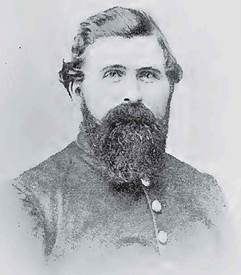
Samuel C. Means, a Waterford Mill Owner,
leader of the Loudoun Rangers


WHITE WASH

In the past week, I urged that we remove the Confederate Soldier Statue, bearing a rifle in the direction of approaching visitors to the court in Leesburg, because it is an offending symbol of disunion, lawlessness and slavery.

In 2009, a Deputy Clerk at the Court, Jennifer Grant, reportedly told the Post that she “didn’t like [the statue],” but “there were certain things people didn’t talk about.”

Johnny Chambers, on his way to Court this past Tuesday, told WUSA*9 that, “It’s hard to get justice when you got people that live in this area, that run this country, that believe in this system,”  pointing at the Confederate Soldier statue.

Leesburg court personnel told me, “We all read what you wrote.  We here talk among ourselves and some of us have resented that statue.  … You should know you have support in this building.”

The most virulent opposition to removing the statue claims that the statue’s not about slavery, it’s just history. 

Mr. G. of Loudoun County said, “I hear people say that all the time – the Civil War wasn’t really about slavery … get real, of course it was.”  (Not all persons prefer to be identified publicly; thus the initials.) 

Ms. R said, “I would contend that the Civil War was fought over States Rights to use slavery as their economic engine.”

Mr. S. said these confederate soldiers were “fighting to prop up the plantation owners who both pumped them up on propaganda and forced them through conscription to fight ..” 

Mr. W. said, “there was only one difference between the Confederate Constitution and the U.S. Constitution, and it was the ‘right’ to own other human beings.”

In our Constitution, we expressly state “we the people” seek “to form a more perfect union;” the Confederate Constitution doesn’t say that – as it was born of disunion.

Our Constitution says we seek to “provide for the common defense;” the Confederate Constitution said no such thing; in fact, the Confederates were breaching their obligation to “the common defense” by seceding.

Our preamble provides for the “general welfare,” the Confederate Constitution does not.

As for why the South seceded, Article I, Section 9, Clause 4 of the Confederate States Constitution prohibited any law that denied or impaired “the right of property in negro slaves …”

Article IV, Section 2 of the Confederate States Constitution granted its citizens the right to travel anywhere “with their slaves.”

Article IV, Section 3, Clause 3 authorized slaves in any new confederate territory they acquired, and presumably that included the North if the Confederates could win the war.

So, it was about slavery.

Otherwise, the true history of Loudoun County has been white-washed.

Loudoun Delegate John Janney presided over an extraordinary legislative session in Richmond, convened by the Governor, on April 4, 1861.  Janney argued for union, and the delegates voted for Union, by a margin of almost two to one, 89-45.  

Rabid secession leaders, however, sought to overturn the result.  Intimidated union delegates left Richmond.  The second vote, on April 17, supported secession, 88-55. 

Some called for a vote of the public.  50,000 rebel troops came into Virginia to “help.”  Union voters fled to Maryland.  Other Union voters were barred from voting.  Some who did vote union were thrown into the Potomac.  There were disturbances at the polls at Lovettsville and Lincoln.  There were directions to the troops that they could use bayonets at the polling places.  West Virginia withdrew from Virginia on June 13, 1861, denouncing secession, and standing with the union.  When the remnant that was Virginia counted the ballots, secession “won.” 

Union supporters were then arrested or driven out of Virginia.  Confederate cavalry took teams of horses and wagons from farmers in the German and Quaker settlements.  If they didn’t have either, they were pressed into service as drivers.

Samuel C. Means owned the mill at Waterford.   He refused to take up arms against the United States.  The Confederates took all of his property, and his horses, wagons, hogs, flour, meal, everything.  Means retreated to Maryland but returned leading the Loudoun Rangers drawn from the Quaker and German settlements in Loudoun to fight for the Union.

We have no statue to the Rangers who remained faithful to the Union, only a plaque opposite the Mill in Waterford.

In the last week, we’ve also heard from those mobilized to oppose removal of the statue, many of the same folk who unsuccessfully fought to place confederate flags in Leesburg.  Among the hard worded opposition, there is only one e-mail correspondent that may fairly qualify as a threat -- and we’re forwarding that one to the authorities.

It is right and just to remove this statue.  Speak out if you agree.


TAKE THAT STATUE DOWN

Take that confederate soldier statue down that stands in front of the historic Leesburg Court House!

It’s a symbol of disunion and slavery.  If it’s to stand anywhere, let it be in a museum but not at the front of a court of law on public grounds. 

Our forebears could have placed a less offensive symbol in front of the court house in 1908.  But they didn’t.  They intended to make a statement – an unacceptable statement – and it’s high time we rejected that offensive statement.

Years ago, in the 1980s, there were stocks and whipping posts in front of this same court house. 

I made reference at a sentencing in the court house once, how it was “unfortunate” that such dehumanizing and tortuous methods of punishment stood directly in front of a court house when we were considering punishment in a criminal case. 

According to the American Anti-Slavery Society in 1839, a slave “was placed in a sitting position, with his hands made fast above his head, and feet in the stocks, so that he could not move any part of the body.”  This took less effort than whipping.  So, it became preferred as a punishment because, well, it took less physical effort.

No doubt others thought that these instruments of torture should be removed – and they were.

Now we should finish the job – and remove the statue as well.
The Thirteenth Amendment to the United States Constitution abolished “slavery” and “involuntary servitude” and granted Congress the power to enact “appropriate legislation.” By the 1866 Civil Rights Act, black citizens enjoyed “the full and equal benefit of all laws and proceedings for security of person and property as is enjoyed by white citizens.” 

Under the Amendment and the 1866 Act, what were called “badges of slavery” were outlawed. 

Plainly, stocks and a whipping post were “badges of slavery.”  This statue is as well.

Since 1908, this confederate soldier has stood directly in front of the old courthouse, elevated on a pedestal, with his rifle pointed straight at you as you approach the old courthouse.  

A Confederate soldier plainly represents what he fought for, for disunion, so that any state could ignore the constitution and break its constitutional compact with every other state, violate the law of the land, in order to preserve and spread slavery into the territories, to continue the stigma, the badges of slavery, in perpetuity. 

President Andrew Jackson reprimanded Vice President John C. Calhoun at a party in 1830, saying, “Our Union must be preserved.” 

Calhoun feared that, if slavery were abolished, whites would be forced into that working class, at low pay.  Calhoun asserted the right of states to nullify what they didn’t want. 

In 1858, Abraham Lincoln said in Springfield, Illinois that, “a house divided against itself cannot stand.”  He said those who favored slavery were of the view, “if any one man, choose to enslave another, no third man shall be allowed to object.”  Lincoln said one object of the Scott decision was to deny citizenship to slaves so they had no rights or privileges.

All who approach this statue may rightly recall the unequal treatment before the law suffered by persons of color and how it persists to this day long after the civil war.

Many know about the kidnapping and murder in 1955 of the black youth, Emmett Till, 14, how the trial concluded with acquittals, followed by the admissions of the acquitted defendants, bragging to a magazine, how they had really done the dirty deed. 

Medgar Evers, an NAACP field secretary, was killed in 1963 because he sought to overturn segregation in the South.  When Byron De La Beckwith, of the White Citizens Counsel, was tried, two all-white juries deadlocked.  In 1994, 30 years later, De La Beckwith was tried and convicted.

The NAACP came into existence about the time our Confederate Soldier was installed; the Klu Klux Klan returned re-vitalized about the same time.

Virginia was infamously known for its massive resistance against segregation.  In Loudoun, we had segregated schools, movie theaters, the pool; in fact, when directed to open the pool to black and white alike, the pool was filled with cement.

It’s therefore no metaphorical coincidence that we have this imposing bronze soldier, the symbol of the southern nullification movement that set out to disunite our nation, confronting every citizen who approaches our courts of law.

It is long past the time when we can pretend that a confederate soldier statue is not itself a badge of slavery.

It’s long past the time when we should take it down. 


Friday, May 10, 2013

COLUMN: BLUNDER ON … by John P. Flannery


It is remarkable how often, after the fact, everybody knows what should have been done to avoid the latest national disaster.  

You have to wonder if they really thought about the matter at all beforehand.

Consider how many Americans following the Boston Marathon bombing thought Chechens were from Czechoslovakia.  

Petr Gandalovič, Ambassador to the United States from the Czech Republic, had to inform the “social media” that “the Czech Republic is a Central European country; Chechnya is a part of the Russian Federation.”  

What we don’t know, we all need to know so that we can make informed policy decisions.  

To make matters worse, our modern political “dialogue” consists principally of public disinformation focused on banal distractions and not what really matters.  

We are a culture that poses with equanimity but that incites its citizens against immigrants, racial minorities, welfare mothers, feminists, gays and lesbians.

In the shadow of Earth Day, I’d like to underscore one of those issues that prompts a sadly anorexic dialogue about how we can safely breathe the air and drink the water.

The ostrich view oft heard is that, “the earth will right itself no matter what we do,” when everything we’ve learned since the industrial revolution has shown the outcome to be otherwise.

Some local fossil fool fanatic planted an over-sized wooden political poster at the intersection of local route 7 and the Berlin Turnpike in 2008 saying, “Drill, Baby, Drill!” 

What if someone put an oil rig or coal mine on his property -- like we find in West Virginia -- and conducted a follow-up interview, would he have a different opinion?  Perhaps not.

Among the most frequent political deceptions is how politicians tell us we should act for our children – no matter the issue.  

Really?  

Then what should we do in response to that California study that found a mom’s exposure to traffic-related air pollution could prompt autism in her newborn?  Columbia University found that babies in the womb, with prenatal exposure to air pollutants, suffered more from anxiety, depression, and attention span challenges. In China, where the children are wearing masks to insulate them from the polluted fog, they found prenatal exposure to high levels of air pollutants prompted children born with smaller heads, slower growth patterns, and poor cognitive development. 

What are we going to do for these unborn children?

Nor can we ignore that we have the challenge of those who don’t know the difference between a Czech and a Chechen. 

A large segment of our population has embraced a cartoonish cosmogony of how our planet and life began.  They refuse to accept what a basic High School Chemistry class teaches about the greenhouse effect.  We are going to have to work around this ignorance.

In our County, Loudoun, we have adults who tell their children to clean their rooms but they won’t clean our streams.

In our State, Virginia, our General Assembly defers to mining and drilling, almost without exception, 
and discourages alternative renewable energy sources even though we have these powerful winds up and down our Atlantic coast that we could harness 

In our nation, we are sharply divided over the approval of Trans Canada’s proposed 875-mile 3-foot diameter Keystone XL pipeline, that would transport 830,000 barrels of crude tar sands oil a day from Canada’s strip mined Alberta boreal forest into our nation.

This dirty oil doesn’t spurt out of some old-fashioned well rig.  You’ve got to excavate two tons of sand to get one barrel of bitumen, called “junk energy.”  Bitumen is called “junk” because it produces less than a quarter of the energy you get from conventional oil, and releases 450% of the climate-changing carbon emissions of crude oil.

The proposed pipeline would carry this tar oil across the high plains states, across 250,000 ranches and farms, and past 1,500 waterways, from the Yellowstone River in Montana to the gulf where the refineries are. 

As for those promised “new” jobs, forget about it; there are only about 35 permanent local jobs and 390 temporary jobs for Americans (the bulk of the temp jobs will go to skilled Canadian workers). 

This pipeline may put at risk the million jobs we now have from those ranches, farms and waterways.  Last month, 200,000 gallons of tar sands crude “leaked” from a pipeline in Mayflower, Arkansas, and devastated that community.  This happens all the time.  In the last twenty years, there were 5,611 pipeline failures releasing 100 million gallons of oil.  If this new pipeline breaks, it can leak into waterways, even into the vital underground Ogallala aquifer that provides water to farmers and ranchers, water necessary to raise livestock and grow crops.

Forget about oil independence; once this dirty tar oil is refined in the gulf, it’s going to the highest bidder off shore.

We cannot afford to have our forehead slapping epiphany after we’ve gotten this one wrong.

No big signs will tell us we are about to reach the tipping point of this environmental disaster.

We have to get smart now or risk our own survival and, oh yes, the survival of our children.

Wednesday, May 1, 2013

RUNNING TOWARD DANGER – NOW THAT’S COURAGE! by John P. Flannery


Heartless psychopaths planted two home-made pressure cooker bombs loaded jam packed with tiny nails and ball bearings at the finish line at the Boston Marathon last Monday.

27,000 runners from 96 countries converged on Boston to run a race repeated every year since 1897.

When the container ripped apart from the exploding powders within, projecting shrapnel from the torn cooker, hurling nails and ball bearings indiscriminately, it cut legs, maimed, and even killed three innocents including an eight year old boy who had just congratulated his Dad on finishing the long race.

Unaware of any danger, distracted, celebrating a world-renowned athletic event convened on Patriots 
Day, runners, family, and friends were enjoying a grand race on a day that honors our revolutionary spirit, when our forbears resisted British rule at the battles of Lexington and Concord.  
A momentary and understandable panic enveloped this marvelous sporting event when first, one bomb, and then another down the street sent powerful shock waves at ground level, knocking a 78 year old runner to the ground, pumping clouds of white smoke straight up into the air, transforming the viewing spaces by the finish line from a crowd of contented onlookers into a scene of screaming carnage.

A pastor at the ceremonial service afterwards, on this past Thursday, said he was at a loss to understand where God was on the day of the twin bombings.

Of course, if we truly have free will, some are free to choose to kill innocents – as happened that day – and without God’s willing it.

I’d like to think, however, that there was a divine will at work, inspiring runners, family, friends, citizens, police, emergency personnel, doctors, and nurses to run into the smoke of the explosions, without knowing whether there were other explosions to come, toward the screams of pain, toward the fallen, undeterred by blood and severed limbs, so that they could help those in pain and shock.
Some philosophers talk about our connection, one to the other, and how we will risk our lives for another, even for a complete stranger, at the risk of our own.

After the investigation that followed, we focused the nation’s attention on two brothers that the authorities and the relentless news outlets declared responsible for this inhumane outrage.

One brother is now dead.  The surviving younger brother is wounded, in custody, and recovering at a hospital.

Unfortunately, this is where all that we accomplished may run off the tracks.

The federal crime that seems to fit the array of daily news reports is using weapons of mass destruction (18 United States Code Section 2332a), and the surviving suspect could therefore face a death penalty if the Attorney General makes that determination; by contrast, Massachusetts has no death penalty.  For the purposes of this statute, the “weapon” must only be a “destructive device,” defined elsewhere in the federal code (18 United States Code Section 921), as any “bomb.” 
Some would prefer we charged an act of “terrorism” (18 United States Code Section 2332b), but we’d have to have “conduct transcending national boundaries” and, at this writing, there’s no such evidence.

There are those in the government who insist that a team of special “interrogators” interview the hospitalized surviving suspect without telling him he has a right to remain silent. 

You all know that an accused in custody has a right to remain silent.  It is true that there is a Supreme Court case that said, under more narrow circumstances than we have here, that there can be an exception to advising a person he has a right to remain silent, a public safety exception. 

There are several problems with that. 

First, the authorities told the public when the surviving suspect was arrested that the public was safe.  Oops! 

Second, you probably can see why this “exception,” if applied as the government proposes, could engulf the constitutional right to remain mum in any case involving public safety, like when guns or bombs are involved. 

Third, if the government decides later that it’s a tad short on evidence, and the Court decides, “you G-men went too far,” then whatever leads the government follows from what the suspect said, may be thrown out, as well as whatever he said. 

Fourth, this may be a lot of thumb sucking because, in the end, the hospitalized suspect may not be able to speak, or he may be smart enough on his own to say that he’d prefer to be silent and have an attorney advise him who was forthright about his rights.

Some others want to treat our suspect, who is a citizen, naturalized a year ago, as if he were a war combatant and try him by a military tribunal.  No matter that there is no evidence that he is a combatant.  At worst, he is a remorseless killer

Boston was unbowed by this tragedy.  The people showed great courage. 

Our government should show some courage, trust in the rights of an Accused to choose not to be a witness against himself and to demand a public trial by his peers.